
The Vedic Guide to Planning Your Char Dham Yatra: Choosing Auspicious Tithis
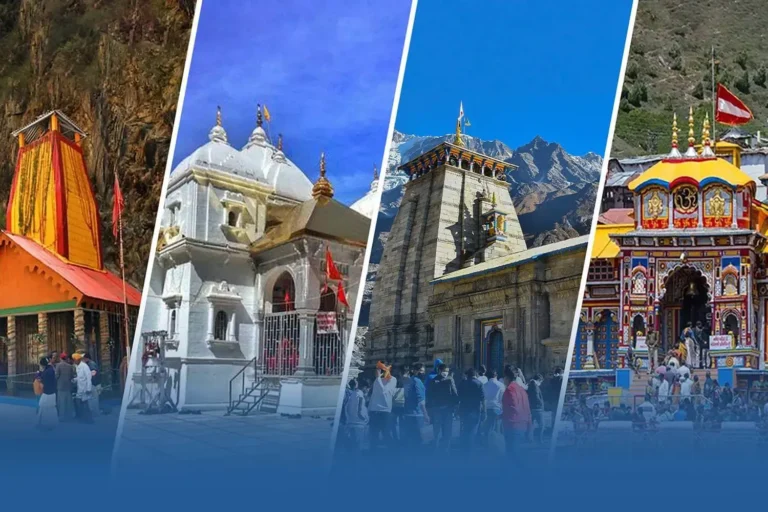
Most people plan their Char Dham trip around school holidays, hotel availability, or weather windows. That works. But if you want to align your journey with the Vedic calendar the way pilgrims traditionally did, the lunar date — called a Tithi — matters quite a bit.
This isn’t about superstition. The Vedic calendar is essentially a precision system built around solar and lunar cycles. Pilgrimage routes in the Himalayas were always tied to it. The Char Dham shrines themselves open and close on specific Tithis every year — that’s not a coincidence.
Here's what you actually need to know.
What Is a Tithi?
A Tithi is a lunar day. Unlike a solar day (which is fixed at 24 hours), a Tithi is defined by the angular relationship between the Sun and Moon — specifically, every 12° of separation equals one Tithi. There are 30 Tithis in a lunar month, split across two fortnights:
– Shukla Paksha — the waxing moon (new moon to full moon), days 1–15
– Krishna Paksha — the waning moon (full moon to new moon), days 1–15
For pilgrimage and travel, Shukla Paksha is traditionally preferred. The reasoning is straightforward: the moon is growing, energy is building, and auspicious beginnings are associated with that phase.
When Does Char Dham Open — and Why That Date?
The Char Dham yatra typically opens around Akshaya Tritiya, which falls on the third Tithi of Shukla Paksha in the Vedic month of Vaishakha (usually late April or early May in the Gregorian calendar).
“Akshaya” means that which does not diminish. Anything started on this day is said to carry lasting results. It is one of the few days in the Vedic calendar considered swayam siddha muhurta — inherently auspicious without needing to check additional planetary positions.
Yamunotri and Gangotri traditionally open on Akshaya Tritiya. Kedarnath opens on the auspicious occasion around the same period (the exact date shifts year to year based on the Panchang). Badrinath follows shortly after.
The closure of the shrines also follows the lunar calendar — typically around Diwali or the days that follow, when the mountain passes become dangerous and the Tithis mark a natural pause in the ritual calendar.
Tithis Worth Planning Around
Purnima (Full Moon)
Purnima is considered one of the most auspicious Tithis for pilgrimage. The full moon is associated with completion, clarity, and heightened spiritual energy. Bathing in the Ganges at Gangotri on Purnima has specific significance in the Vedic texts. If your trip itinerary can place you at a water body or major shrine on a Purnima, that’s worth planning for.
Ekadashi (11th Tithi)
Both the Shukla and Krishna Ekadashi are observed widely across India. Many pilgrims fast on Ekadashi and try to be at a sacred site. If you’re building a Char Dham itinerary, arriving at Badrinath or Kedarnath on an Ekadashi is considered particularly meaningful.
Pradosh (13th Tithi)
Pradosh falls on the 13th Tithi of both fortnights. It is specifically associated with Shiva — and since Kedarnath is one of the 12 Jyotirlingas, reaching Kedarnath on or around a Pradosh day carries traditional significance for Shiva devotees.
Tithis to be Aware Of
Amavasya (New Moon) — Generally not recommended for starting a new journey. Starting your yatra on Amavasya is something most traditional pilgrims avoid.
Rikta Tithis (4th, 9th, 14th) — These are considered less favorable for initiating journeys. You don’t have to reorganize your entire trip around them, but if you have flexibility in your departure date, it’s worth a look.
The Practical Part: How to Actually Check This
You don’t need to learn Sanskrit or buy a printed Panchang from a temple bookstore. Apps and websites like vedictithi give you the Tithi, Nakshatra, and Panchang details for any date and location.
Before locking in your travel dates, spend five minutes on the calendar:
- Check which Tithi your departure date falls on
- See if you’re in Shukla or Krishna Paksha
- Look at where Ekadashi and Purnima fall within your travel window
- If you have a day or two of flexibility, shift accordingly
Most people find they can get at least one major auspicious Tithi to align with a key moment in the trip — arrival at a shrine, bathing at a river, or the start of the journey itself — without rerouting their entire itinerary.
The Months That Work Best
The Char Dham yatra season broadly runs from May to November, but the most significant months from a Vedic calendar standpoint are:
– Vaishakha (April–May) — Opening of shrines, Akshaya Tritiya
– Jyeshtha (May–June) — Shiva-related observances, good for Kedarnath visits
– Shravan (July–August) — The holiest month for Shiva devotees; Kedarnath sees heavy footfall; multiple Mondays (Somvar) with Shiva significance
– Bhadrapada (August–September) — Janmashtami, Ganesh Chaturthi; significant Tithis fall through this period
Most tour operators, including The Searching Souls, run departures across this season. If you mention to them that you want to time a particular shrine visit around a specific Tithi, that’s usually something they can work with.
One Practical Example
Say you’re planning a 10-day Char Dham trip in June. You check the Panchang on VedicTithi and notice that Ekadashi in Jyeshtha Shukla falls on June 16. You plan your Kedarnath day for the 16th. That’s it — no major rescheduling, just awareness that adds a layer of intention to the journey.
That’s really all this is about. Not every pilgrim over the centuries had perfect planetary alignment. But if the information is available and the adjustment is minor, most people feel it’s worth it.
Before You Go
The Char Dham route is physically demanding regardless of timing. Weather, altitude, and logistics are the primary planning factors. The Vedic calendar is a layer on top of that — it adds context and intention but doesn’t replace proper physical preparation.
Plan your dates. Check the Panchang. Talk to your tour operator about the itinerary. And if a Purnima or Ekadashi lines up with a shrine visit, consider it a good sign.
Check the Tithi for any date at vedictithi — the Panchang is free, location-specific, and updated daily.