

Annapurna Circuit vs Manaslu Circuit: Which Nepal Trek Should You Choose?
You've finished Kedarkantha. Maybe Roopkund, maybe Goechala. Somewhere on the walk down, a thought crept in: What about Nepal?
Now you've got six tabs open. Annapurna Circuit. Manaslu Circuit. Both are called "circuits," both cross a pass above 5,000 m, and both take about two weeks. Every page claims to offer the best experience. Yet none answers the question you're really asking: Which one will challenge me without pushing me beyond my limits, and which one will I still be talking about five years from now?
At The Searching Souls, we take trekkers into the Himalayas of India and Nepal, so we understand how big that first step toward a 5,000 m pass can feel. This isn't another article telling you that both treks are amazing. Here's how they actually differ, what to expect from each, and which one might suit you better.
Annapurna Circuit vs Manaslu Circuit at a Glance
| Category | Annapurna Circuit | Manaslu Circuit |
|---|---|---|
| Duration | 12 days | 13 days |
| Highest point | Thorong La, 5,416 m (17,769 ft) | Larkya La, 5,106 m (16,752 ft) |
| Acclimatization | Full day in Manang (3,540 m) | Acclimatization stops in Sama Gaun and Samdo |
| Typical walking day | 5–8 hours | 4–7 hours (8–10 hours on pass day) |
| Permits | ACAP + TIMS | Restricted Area Permit + MCAP + ACAP + local fee |
| Accommodation | Teahouses | Teahouses, with simpler facilities at higher elevations |
| Best seasons | March–May, September–November | March–May, September–December |
Permit fees and trail conditions can change, so always check the latest requirements before booking your trek.
The Annapurna Circuit: Variety Is the Whole Point
Think of the Annapurna Circuit Trek as a trail that changes its character every couple of days. You begin in the green, lively Marsyangdi Valley, surrounded by waterfalls, pine forests, and a river that seems to follow you everywhere. A few days later, the landscape becomes drier and more rugged, with hills that look almost Tibetan. You'll walk through traditional stone villages such as Ghyaru and Ngawal, with spectacular views of the Annapurna range unfolding around you.
Then comes Manang, sitting at 3,540 m. A well-planned itinerary includes a full acclimatization day here, and it's not simply a day to relax. You'll usually take a short hike to a higher viewpoint before returning to Manang to sleep at a lower elevation. Honestly, this rest day is one of the smartest parts of the itinerary.
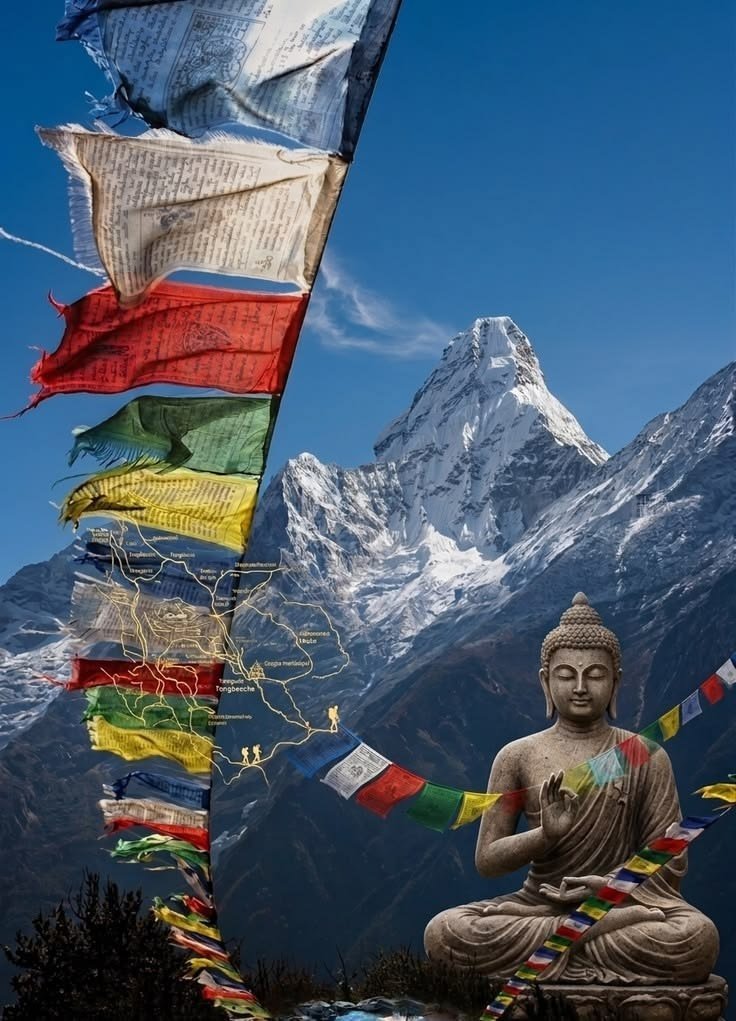
The big day is Thorong La Pass at 5,416 m. You'll wake up before sunrise at Thorong Phedi or High Camp, begin climbing under a sky full of stars, and gradually make your way toward the prayer flags as the first light appears. After reaching the pass, you'll face a long descent of around 1,600 m to Muktinath, a sacred destination for both Hindus and Buddhists. Arriving there on foot after crossing a 5,000 m mountain pass feels very different from reaching it by road.
The days after the pass bring another change of scenery. Depending on your itinerary, a jeep may take you through parts of the Kali Gandaki Valley, passing Jomsom and the apple orchards of Marpha before continuing toward Tatopani and its natural hot springs. Your knees will thank you for avoiding some of the lower road sections. From there, the route can continue toward Ghorepani, followed by a descent to Hile and the journey onward to Pokhara.
One thing worth knowing is that roads now reach several sections of the Annapurna Circuit. That's why many modern itineraries use jeeps for selected lower sections while keeping the most scenic, high-altitude stretches on foot.
The Manaslu Circuit: The Quiet One
The Manaslu Circuit Trek offers a glimpse of the Himalayas away from the busier trekking routes. Your journey begins with a drive from Kathmandu to Machha Khola, which can take around 8–10 hours depending on road conditions. It's a bumpy ride along rough mountain roads, and we won't sugarcoat it. But once you start walking, the adventure really begins.
The trail follows the Budhi Gandaki Gorge, crossing suspension bridges and winding along cliffside paths through bamboo forests and remote mountain settlements. Compared with Annapurna, you'll encounter far fewer trekkers along the way.
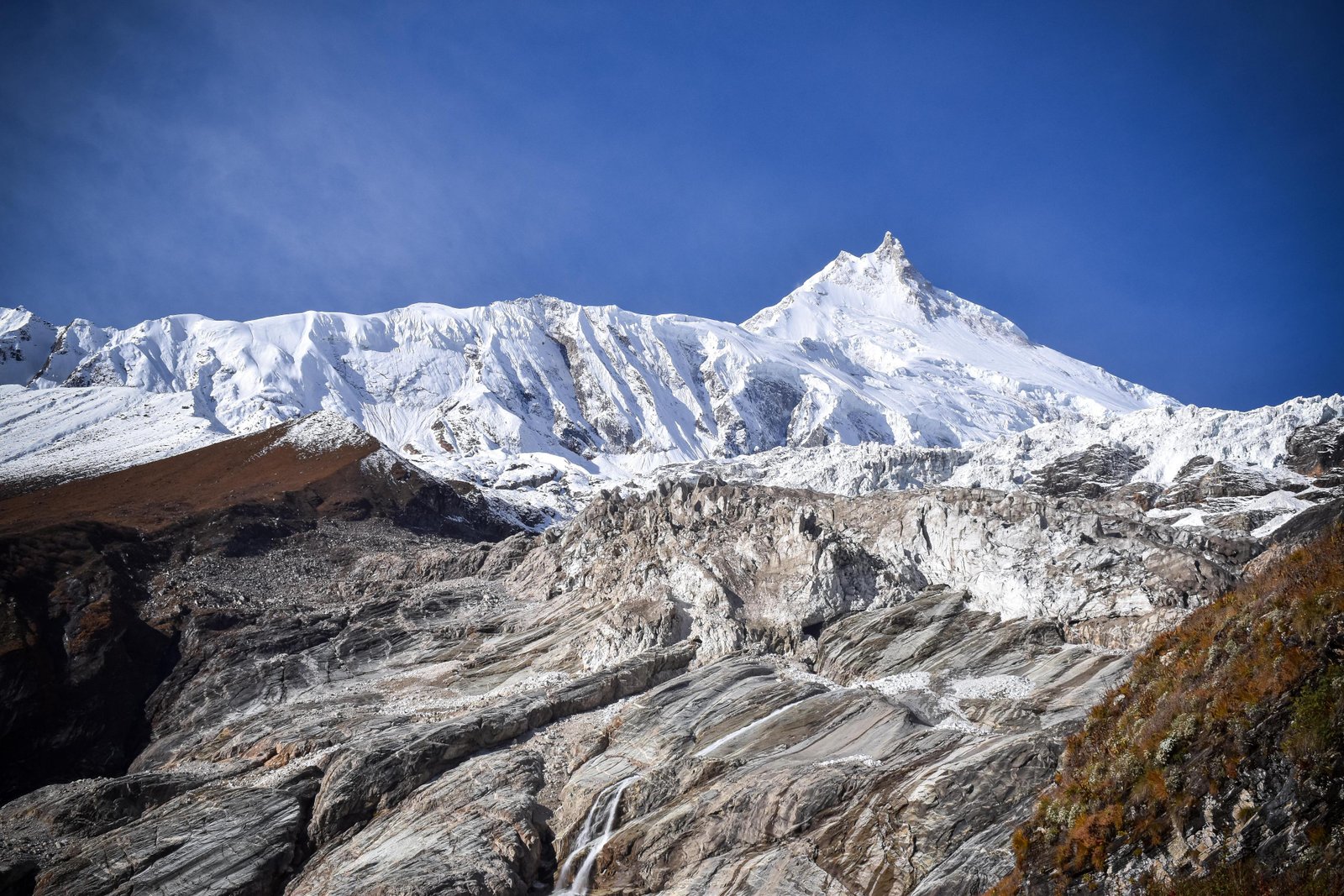
Because Manaslu lies within a restricted trekking area, its higher villages retain a distinct Tibetan-influenced character. Expect traditional flat-roofed stone houses, mani walls, prayer flags, and monasteries such as Ribung Gompa near Lho. From Lho, Mount Manaslu (8,163 m), the eighth-highest mountain in the world, rises dramatically above the village. It's the kind of view that makes an entire trekking group stop talking for a moment.
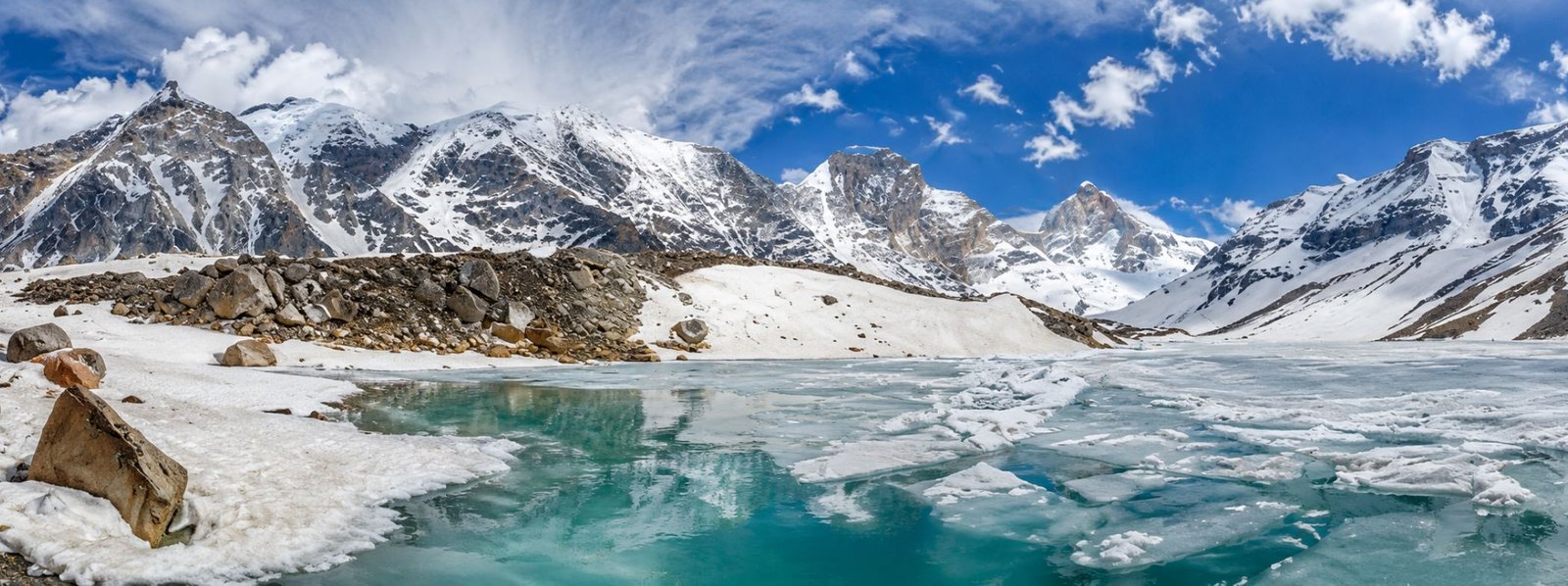
The itinerary includes acclimatization stops at Sama Gaun and Samdo. From Sama Gaun, you can hike to the turquoise waters of Birendra Lake or take on a more demanding walk toward Manaslu Base Camp, depending on your fitness and conditions. After Samdo, the trail climbs toward Dharmasala at 4,460 m, the final overnight stop before crossing the pass.
Larkya La Pass at 5,106 m is the highlight of the trek. The alarm usually goes off around 3 AM, and you'll be walking by 4 AM. Although the pass is lower than Thorong La, don't underestimate it. This is typically the longest and most demanding day of the trek, taking around 8–10 hours. After crossing the pass, you'll face a steep, knee-testing descent toward Bhimtang.
The trade-off for Manaslu's quieter trails is simpler accommodation. Rooms become increasingly basic as you climb, hot showers become harder to find, and facilities are limited in the higher villages. There are also no ATMs beyond Machha Khola, so carrying enough cash is essential.
The trek eventually finishes around Tilije, from where you'll drive back toward Kathmandu or Pokhara, depending on your travel arrangements.
Annapurna Circuit vs Manaslu Circuit: Where They Really Differ
Altitude and Difficulty
Let's put things into perspective using elevations you might already be familiar with. Roopkund reaches approximately 4,800 m (15,748 ft). Larkya La sits at 5,106 m, while Thorong La reaches 5,416 m.
Those extra metres matter. However, the bigger difference is the amount of time you spend at altitude. Both circuits keep you above 3,000 m for roughly a week, making them considerably more demanding than shorter Himalayan treks.
Thorong La is the higher of the two passes, but Manaslu is generally more remote and offers fewer opportunities for comfort or flexibility. Neither trek requires technical mountaineering skills, but both demand good physical preparation, proper acclimatization, and mental endurance.
If you're coming from Indian Himalayan treks, don't assume that completing a few challenging treks automatically makes you ready for either circuit. These are demanding high-altitude journeys, not easy first-time treks in Nepal.
Crowds and Comfort
The Annapurna Circuit offers more of almost everything: more villages, more bakeries, more menu choices, and more places to charge your phone. It's a well-established trekking route with a wider range of facilities.
Manaslu, on the other hand, is quieter and more remote. As you climb beyond Namrung, food options become more limited, charging your devices may cost extra, and hot showers become increasingly difficult to find.
If a warm bed, a decent cup of coffee, and a comfortable place to relax at the end of the day are important to you, Annapurna may be the better choice.
But if you value peaceful trails, remote villages, and a stronger sense of adventure, Manaslu has a lot to offer.
Culture and Scenery
The Annapurna Circuit is a cultural and geographical sampler. Along the route, you'll encounter Gurung and Manangba communities, traditional Thakali settlements in Mustang, and the sacred pilgrimage destination of Muktinath.
Manaslu offers a more focused cultural experience, particularly through the Tibetan-influenced villages of the Nubri region. Its traditional architecture, monasteries, Buddhist culture, and dramatic views of Mount Manaslu create a distinctive Himalayan atmosphere.
In short, Annapurna offers greater landscape and cultural variety, while Manaslu delivers a deeper experience of remote Himalayan life.
Logistics
Both trekking routes require a licensed guide and permits arranged through a registered trekking agency. Independent trekking is not permitted under the current regulations.
Manaslu has additional restrictions because it is a controlled trekking area. Its Restricted Area Permit must be arranged through a registered agency, and trekkers must meet the applicable group and guide requirements.
Annapurna is comparatively straightforward in terms of logistics, with more established trekking infrastructure and easier access to transportation along parts of the route.
Best Time to Trek: When Should You Go?
Both circuits are best enjoyed during spring and autumn, when weather conditions are generally more favourable and mountain views are clearer.
For the Annapurna Circuit, the main trekking seasons are March to May and September to November. Spring brings blooming rhododendrons and warmer temperatures, while autumn offers clearer skies and excellent mountain visibility.
The Manaslu Circuit also has two main trekking seasons: March to May and September to November. Early December can sometimes be possible, but colder temperatures and increasing snowfall can make crossing Larkya La more challenging.
As winter approaches, both high passes can receive heavy snowfall, and weather conditions may delay or prevent a crossing. Always allow some flexibility in your itinerary, especially if you have an international flight to catch after the trek.
It's also worth arranging your permits and trekking logistics in advance. Aim to plan at least four weeks ahead for Annapurna and four to six weeks ahead for Manaslu, particularly during the busy spring and autumn seasons.
Permits and Money: The Boring but Important Part
The Annapurna Circuit requires an Annapurna Conservation Area Permit (ACAP) and a TIMS card, subject to the latest applicable regulations.
The Manaslu Circuit requires a Restricted Area Permit (RAP), a Manaslu Conservation Area Permit (MCAP), an ACAP for the relevant sections of the route, and any applicable local municipality fees.
If you're travelling on an Indian passport, you may qualify for SAARC rates on conservation permits. For example, the ACAP and MCAP fees have traditionally been NPR 1,000 for SAARC nationals, compared with NPR 3,000 for most other foreign nationals. TIMS fees may also differ. However, the Manaslu Restricted Area Permit and local fees follow their own pricing rules.
Permit fees and regulations can change, so confirm the latest rates with your trekking agency before departure.
Cash is another important consideration. Exchange enough money into Nepali rupees before leaving Kathmandu. On the Manaslu Circuit, there are no ATMs beyond Machha Khola, so plan your cash requirements carefully. Carrying approximately USD 200–250 worth of Nepali rupees for personal expenses such as charging, snacks, drinks, and tips can be a reasonable starting point, depending on your spending habits.
On the Annapurna Circuit, ATMs are available in places such as Besisahar and some larger settlements. However, network issues and unreliable machines mean you shouldn't depend entirely on them.
So, Which Trek Should You Choose?
Here's our honest recommendation.
If this is your first major trek in Nepal and you're coming from the Indian Himalayas, we'd generally suggest starting with the Annapurna Circuit. You'll experience a wider variety of landscapes, visit more developed villages, find more accommodation and food options, and have greater flexibility with transportation along certain sections.
It's a fantastic all-round Himalayan adventure.
Choose Manaslu if what you miss on busy trekking trails is silence. If you'd happily trade a hot shower for a spectacular view of an 8,000 m mountain, enjoy exploring remote villages, and can stay flexible when plans change, Manaslu could become the more memorable experience.
Just don't mistake its quieter trails for an easier trek. Manaslu is physically demanding and requires careful preparation.
And if you're thinking, "Neither of these sounds right for me just yet," that's a perfectly reasonable decision.
A shorter trek in the Annapurna region, such as our Annapurna Base Camp Trek, can be an excellent way to gain more high-altitude trekking experience before committing to a longer circuit.
How to Prepare for the Annapurna or Manaslu Circuit
Both circuits demand similar levels of physical preparation, so you can follow much the same training routine for either trek.
Start by building your cardiovascular endurance. Aim for three or four sessions each week of brisk walking, running, cycling, or stair climbing. Gradually increase your training sessions until you can comfortably maintain a steady pace for 60–90 minutes.
Strength training is equally important. Include squats, lunges, and step-ups at least twice a week. These exercises help prepare your legs for long climbs and, particularly, the demanding descents that can put significant strain on your knees.
Once a week, go for a longer walk carrying a loaded daypack weighing around 5–8 kg. Whenever possible, wear the same trekking boots you'll use in Nepal. Breaking in your footwear before departure can help prevent painful blisters during the trek.
However, here's something many trekkers overlook: physical fitness alone does not determine how well you cope with high altitude. Acclimatization is equally important, and even strong, experienced trekkers can develop altitude sickness.
Learn to recognize the early warning signs, including headaches, nausea, dizziness, and unusual fatigue. Inform your guide immediately if you experience any symptoms, and never ignore them or attempt to push through worsening symptoms. Your safety should always come before reaching the next village or crossing the pass.
One Thing to Do This Week
Pick a month, then check your passport. That's it.
Once you know when you want to travel, choosing between the Annapurna Circuit and Manaslu Circuit often becomes easier. The season, your available time, and the kind of trekking experience you're looking for will help narrow things down.
Whichever route you choose, remember one thing: walk slowly, respect the altitude, and enjoy the journey.
The pass will still be there.
Annapurna Basecamp Trek
10 Days • Starting from ₹35,000