How to Reach Valley Of Flowers From Delhi
Some places look like they belong in a fairytale, and the Valley of Flowers National Park is one of them. Located in the Chamoli district of Uttarakhand at an altitude of around 11,550 feet, this beautiful UNESCO World Heritage Site comes alive every monsoon with more than 500 species of wildflowers. From the rare Himalayan Blue Poppy to the beautiful Brahma Kamal and Cobra Lily, every corner of the valley is filled with color and breathtaking views.
So if you are planning a trek to Valley of Flower from Delhi , this blog will help you with everything you need to know, from the best routes from Delhi and transport options like trains and buses to helpful travel tips, so you can plan a smooth and memorable journey to one of the most beautiful places in Uttarakhand.
How to Reach Dehradun/Rishikesh From Delhi
Reaching the Valley of Flowers from Delhi is quite easy. Since Delhi is the national capital, it has great train, bus, and flight connections. Your first step is to reach Dehradun or Rishikesh, as the journey to the Valley of Flowers starts from these cities.
The easiest way to get there is by train or bus. Both Dehradun and Rishikesh are well connected to Delhi, so you can choose either one based on your travel plans. From there, you can continue your journey towards the Valley of Flowers and begin your unforgettable Himalayan adventure.
By Bus: An overnight Volvo Bus from Delhi is the most convenient mode to reach Dehradun. The price of an Overnight Volvo Bus from Delhi is approximately ₹500 to ₹1000, whereas ordinary Bus rate is slightly lower, that is from ₹300 to ₹700. Road trip is approximately 4:50-6:50 hours, depending on traffic and weather. Also not to forget the game-changer! I mean, Delhi and Dehradun Expressway which was just inaugurated, and it has cut down the travel time of the previous 5–6 hours to about 2.5 hours. With the fast travelling times you can now travel to Dehradun by bus easily, quicker and less cost as compared to the earlier times.
You can directly book your bus tickets from:
https://www.redbus.in/bus-tickets/delhi-to-dehradun\
https://www.makemytrip.com/bus/search/Delhi/Dehradun/
By Train: Other than bus, there are regular trains too for both Dehradun and Rishikesh which travel overnight to New Delhi. You can easily book your train tickets through the official IRCTC website. https://www.irctc.co.in/nget/train-search
By Air: If you are flying to Dehradun from Delhi than you will land at Jolly Grant Airport which is nearer to Rishikesh than the central area of Dehradun so coordinate with the TSS team to pick you up from Rishikesh.
https://www.makemytrip.com/flight/search?trip
https://www.ixigo.com/cheap-flights/new-delhi-dehradun-del-ded
Journey After Reaching Dehradun/Rishikesh
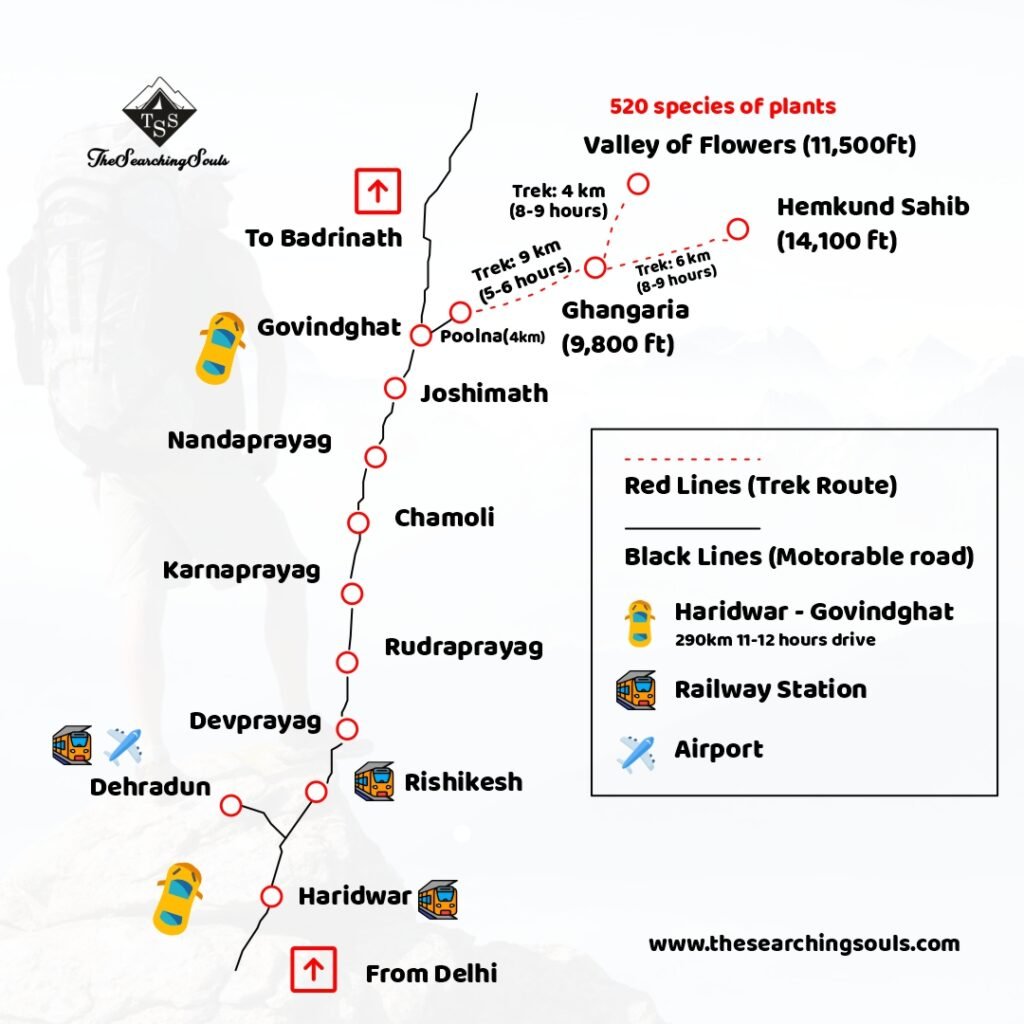
Day 1: Dehradun/Rishikesh to Govindghat/Joshimath | Drive Distance: 255 km | Drive Duration: 11-12 hours
Once you reach Dehradun or Rishikesh, the actual mountain journey begin. The TSS (The Searching Soul) team will pick you up early in the morning, exactly at 7:00 AM from Dehradun or 8:15 AM from Rishikesh This is a long but highly scenic mountain road trip. As you ascend, your vehicle will trace the path of the sacred Alaknanda River and by evening, you will reach Joshimath or Govindghat.
Day 2: Govindghat/Joshimath to Ghangaria Via Poolna | Trek: 10 km | Trek Duration: 5-6 hours | Altitude gain: 1,312 m
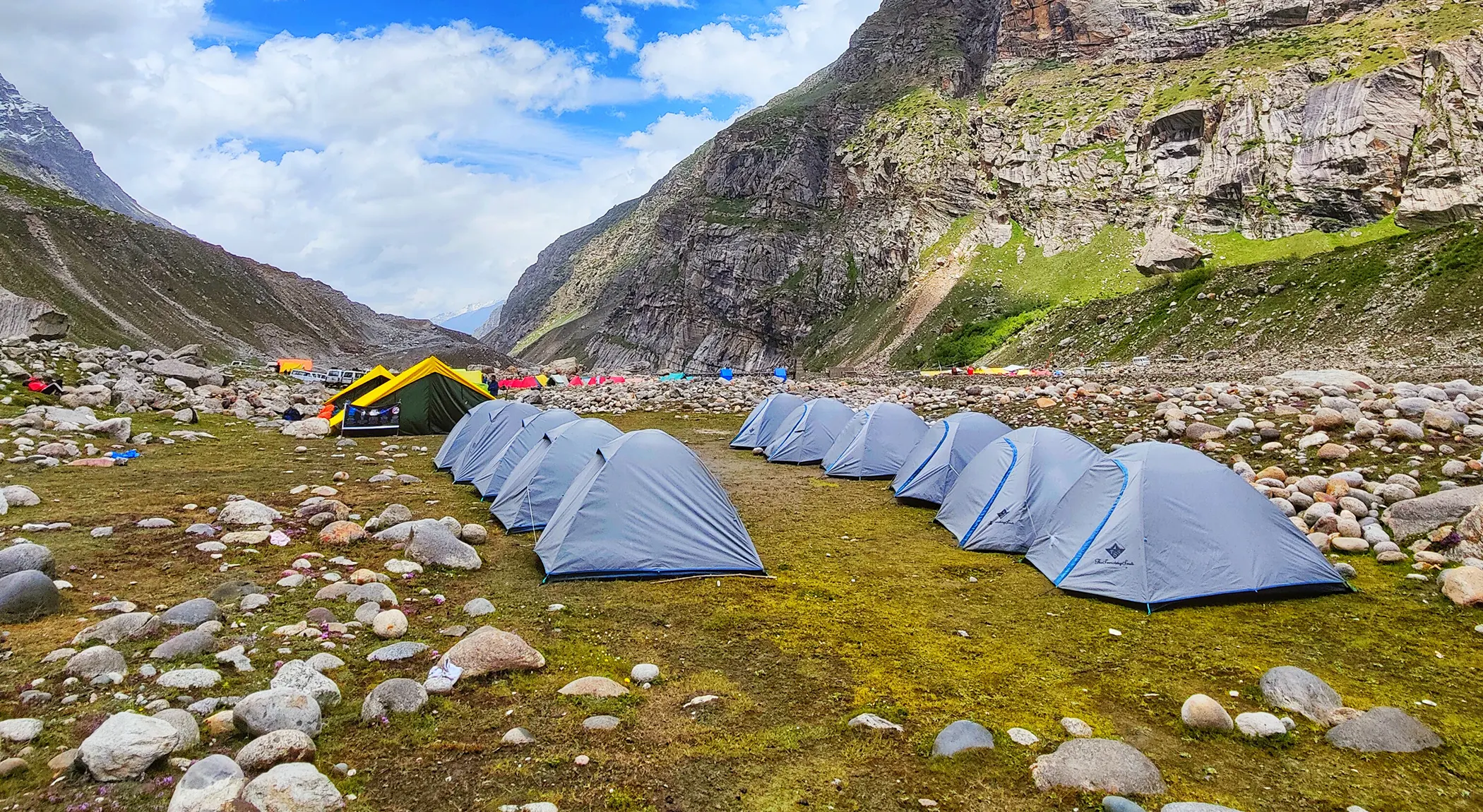
On Day 2 , a short 4 km drive takes you to Poolna, which is the official trailhead where the motorized road ends. From Poolna, your 10 km trek officially begins. The trail is well-maintained and steadily ascends. Moving at a steady pace, you will reach Ghangaria by late afternoon. This peaceful village will serve as your base camp for the next three nights
Day 3: Ghangaria to Valley of Flowers and back |Trek Distance: 4 km to 8 km (One way) | Trek Duration: 10 hours| Altitude Gain: 609 m
Today is the most magical day of the adventure. The gates to the Valley of Flowers National Park open precisely at 9:00 AM, so you should aim to reach the Forest Department checkpoint by 8:45 AM. After getting your entry permits and crossing the stone signpost, the paved path disappears, and the valley opens up before you. Overnight camping is strictly prohibited inside the national park to protect its delicate ecosystem. You must pack your lunch, spend your time exploring, and start heading back to Ghangaria base camp by 5 PM
Day 4: Ghangaria to Hemkund Sahib |Trek Distance: 6 km each way |Trek Duration: 10 hours| Altitude Gain: 3049 m
The trail from Ghangaria to Hemkund Sahib, the highest Gurudwara in the world, is a steep, physically challenging pilgrimage trail.. Due to the rapid altitude gain, the air becomes considerably thinner, so remember to pace yourself and use your trekking poles.
Day 5: Ghangaria to Joshimath via Govindghat |Trek Distance: 10 km |Trek Duration: 4 hours| Altitude Loss: 1,312 m
It is time to say goodbye to Ghangaria. As you will steps back down the valley toward Poolna. While the downhill walk is much easier on your lungs, it can place a continuous strain on your knees, so take short, careful steps.
Day 6: Joshimath to Dehradun/Rishikesh| Drive Distance: 255 km| Drive Duration: 9–10 hours
After an early breakfast, you will board your vehicle to head back down highways toward the plains. You can expect to arrive back in Rishikesh by 8:00 PM and Dehradun by 9:30 PM.
Planning Your Return to Delhi: Once you are dropped off in Dehradun or Rishikesh, catching your connection back to the Delhi is very easy.
Travel Tips For The Valley Of Flowers:
1.Visit during the right season: The best time to visit valley of flowers is from July to Early September, when the valley is full of blooming flowers.
2.Carry warm clothes: Even in summer and monsoon, the weather can get cold, especially in the mornings and evenings, so don’t forget to carry fleece, thermal and padded jackets.
3.Pack rain gear: A raincoat or poncho is a must, as rain is common during the blooming season.
4.Wear comfortable trekking shoes: The trail can be slippery, so good-quality shoes with a strong grip are important.
5.Stay hydrated: Carry a reusable water bottle and drink plenty of water during the trek.